I'm going to discuss a resource that is for professional use. https://evernote.com/
I also thrive on TEDtalks but I felt the need to discuss something different.
Years ago I had learned about Evernote though a knitting podcast believe it or not. It was called knitpicks if anyone is interested. The author of the podcast spoke so highly and so detailed about the usefulness of Evernote that I was compelled to give it a try.
Try I did, but quickly lost interest. Years later, while in the education program I needed to find a way to organize interesting articles that I wanted to read, either related to my courses directly or to my side interests related to health. I also confirmed with Eleni that Evernote was still a current and useful tool for curating from the internet. She agreed to give me a refresher and talked me through it in a bit more detail. I am so glad that I took it up again!
Once you have created an account on Evernote, it is easy to use it as a web curation site. It's motto is "Get Organized, Work Smarter, Remember Everything". I now no longer have twenty windows open in order to remind myself which websites I have been to and which articles I want to read. It gives me the flexibility to create many categories of folders. There is also the webclipper option to add to your browser that makes staying organized very easy with very few steps.
After doing a quick survey of what the others did to show their networks I thought mindmeister would be the one to go with, at the last minute though I decided to try something different. www.webspirationclassroom.com.
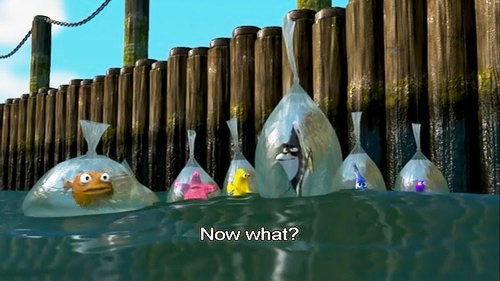
I also discovered what web 2.0 means, hint it's a synonym for PLN! Now I know! While at Westcast this week, I heard speakers talk about being in 'silos'. This is what came to mind from the movie Finding Nemo. Indeed Gill, what next?
Above is my PLN in the spirit of trying out http://www.webspirationclassroom.com/launch.php With some more practice I am sure that my graphic organizers can become something that I can be proud of to share. Some tips I found in taking responsibility for providing our own professional development. Look for answers using the web first and foremost. Everyone is busy and it is best to look for answers yourself than to use up someone else's time. Branch out to "lurking" and linking to other educators in our desired fields. When ready, the next step is to reciprocate and offer help to others. In essence, create a network, find information and participate. It's that easy!
The practice of teaching does not thrive in silos! By modeling this to our students we will ensure that they are able to recognize the learning networks that they have. It empowers the students because it helps them understand the metacognitive aspect of learning networks.
It is easy for me to see the appeal of infographics. Information is designed purposefully to visually engage the reader and to make information easier to understand and recall.
Since beginning my courses at the University I have consistently sought out information to complement what I am learning with infographics and also audio-visual information such as found on YouTube.
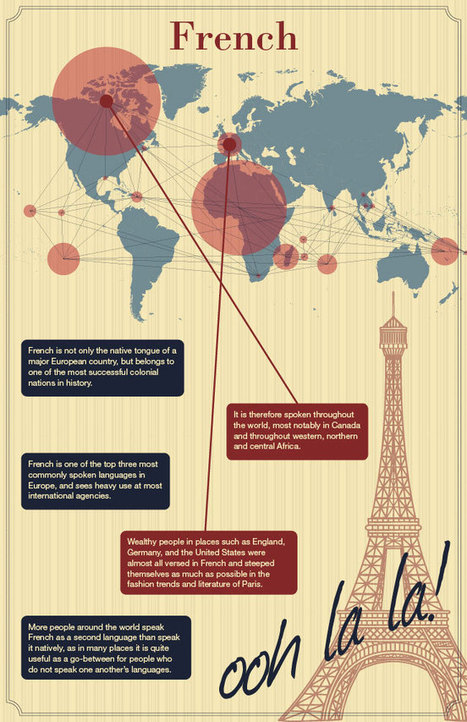
Here are two infographics I found that complement my subjects of French and Art.
Well, that was interesting. I used Venngae to create a simple infographic. That went well. I did not upgrade to a paid subscription so the link is the only way I could figure out how to include it in my blog.
Does anyone else ever have those moments where you hear a message that you've heard before but for some reason today is the day you hear it and it is like you've heard it for the first time? Today's presenter gave such a message today.
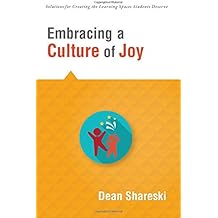
Last year as I crafted my philosophy of teaching I wrote "A child or adolescent's basic needs for safey, nourishment, and belonging must be met before intellectual growth can take place." This message was brought up in Mr. Shareski's visit to our class today as well. This represents one aspect of learning, the other that our presenter is most passionate about is the one he wrote a book on:
Apparently he has also done a TEDtalk, but here he is on the subject of "Surprisingly Awesome" which is linked to what he spoke to us today about.
We were given time to ask Dean questions a couple of times throughout the talk (via zoom). I honestly was lost in deep thought about the implications of his message to me as a teacher. He really did give us "food for thought".
Two questions he proposes students should be able to answer in order to take advantage of the Community of learners that come through the doors of our schools.
1) What did I learn from others today?
2) What contributions did I make to their learning?
There were other great messages as well but the next thing I want to share with you that resonated with me happened when I was exploring his Twitter and blog. There it was, a sense of playfulness, poking fun at the everyday, bam, I was hooked. http://ideasandthoughts.org/2016/05/30/how-to-become-a-brand-or-not/ here are the main points he says on how to become a brand or not, tongue in cheek:
1. The majority of your tweets should be links to other sites. A tweet without one has no value. Bonus if you auto-tweet them all day long. Make your brand 24/7. 2. Never post personal content. No one wants to hear about your naps or golf game or shopping excursions with your wife. The more you tweet about yourself as a human being, the more your brand loses its focus. People use twitter for information, not your silly natterings. 3. Blog like an expert. Your blog posts should be stand-alone artifacts of authority. Questioning your practice or showing ambivalence makes you look weak. Write as if you’re the smartest person in the room. 4. Never engage in conversation on twitter. When people question you or reach out to you, ignore them. It’s a time and energy suck. Spend your time crafting your message. Don’t waste time talking to people. 5. Retweet every compliment someone gives you. This is particularly effective if you’re a speaker and have just completed a talk or workshop. It’s easy to hit retweet. If you want to include a thank you, that’s fine but not necessary. 6. Make your Instagram account a potpourri of awesomeness. This is the one time you might include some personal items. But use caution. A photo of you and your loved one sipping wine at sunset is acceptable. Remind the world that your life is perfect.
I will take it as permission to continue to find the quirky and unusual things that make me tick and bestow them willingly to make others smile, just as he has today.
George Couros https://georgecouros.ca/blog/ and Alec Couros https://couros.ca/
what a positive force these two brothers are for education in Canada. They are both savvy leaders in the field of education and the way they understand the world of the internet and its role in education. Starting out by having these two as a go-to resource for questions that come up in internet use and implications or new understandings is a great place to start.
Kevin Brookhouser http://www.kevinbrookhouser.com/
he is a published author of The 20time Project and Code in Every Class. I started listening to his podcast. I find his approach to the subject of digital citizenship is very easy to grasp.
Eleni Galatsanou http://justskepsis.blogspot.ca/
she is an up and coming trailblazer and leader in her field of study of computer science. Eleni consistently sets the standards of achievement high in everything that she puts her mind to do and her digital footprints are leading the way for beginner techies like me. I will be cheering her on from the sidelines and look forward to witnessing the impact she will have on education in Brandon, Manitoba, and beyond.
Sylvia Duckworth https://sylviaduckworth.com/
she is an avid sketchnoter, French teacher and Tech Coach based in Toronto. Sylvia is up to date with a Twitter following of just under 40K. She also has her own YouTube channel that provides a good resource for teaching French as a Second Language.
she is a retired teacher, teacher-librarian with an addiction to books. Sally is the epitome of what it means to be enthusiastic about reading books to students in Brandon. Her blog features new fiction and contains a very well curated catalog of books she recommends sharing with students and parents.
Last year I took the time to read the chapter by Reynold Redekopp entitled Digital Citizenship Reconsidered: Global Citizenship in a Digital World. As I was reviewing the chapter I listened to an interview of the mountaineering adventurer Reinhold Messner.
I was astonished to discover this man for the first time and wondered why he was not a household name. He made the first solo ascent of Mount Everest, the first ascent of Everest without supplemental oxygen, and was the first to climb all fourteen peaks of 8 000 metres above sea level. Among other adventure challenges he also has published more than 80 books about his mountaineering experiences and has created the Messner Mountain Museum with six individual mountain locations.
Listen to him talking about his craft and the impact of the mountains on him and it doesn't take much to understand that this man is the embodiment of the essential elements of citizenship and stewardship of the mountains.
What do I see that inspires as greatly as this in the world of digital citizenship? Well, for starters Dr. Redekopp begins his introduction with a quote from T.S. Eliot from Choruses from The Rock. This poetic link is something that I can relate to just as climbing mountains (well in my case, very small mountains) is something that I can relate to and appreciate.
How will I present digital citizenship to my students? Will they benefit from a Kahoot quiz that tests their knowledge of the 9 elements as explained in the article by Mike Ribble? Will I give them a chapter to read and report on in the form of classroom tweets? Or will I put student choice and voice in their hands and encourage them to meld their 20% passion project or genius hour time to incorporate one or more element into the purpose or audience that they envision for their project in an authentic way? Afterall, the authentic application is what we are going for in teaching the stuff we're teaching n'est pas?
As per my usual way of exploring ideas, I had to find an online talk by David Wiley to find more depth to the quote we are asked to comment on. Back in 2010, Mr. Wiley gave a TEDx talk on the topic of Openness in Education and the Future. What I came away with are more quotable smart sound bites and that's just from the first 5 minutes!
Here they are!
The role of openness in education means to share, to be generous, and to give. "If there is no sharing there is no education." He says that the most successful educators share the most thoroughly with the most students. The digital expression of knowledge means that access to expertise is no longer a barrier. It is the ability to give and receive knowledge without it having to be given away such as a volume off a shelf that if missing limits access until it is returned.
This to me gives so much more depth to the statement "If there is no sharing, there is no teaching."
At the beginning of my studies at the University and in first-year placements, I had the perception that the expertise of those around me was something that was coveted and reluctantly given away. I know this to be utterly false now but nevertheless, this false perception caused me some stress. I am glad to have been shaken off that perception and willingly participate in exchanges of expertise with colleagues and professors whenever the opportunity presents itself. Becoming engaged with technology is the way to make this exchange possible without a doubt!
Our guest this week came to class via Zoom from Flin Flon.
There are two lasting messages with his talk, one is that the project-based learning is worthwhile. Start small and build from there. Second that Virtual Reality is something that can work in the classroom!
According to this article http://www.theedadvocate.org/benefits-virtual-reality-k-12-schools/ by Matthew Lynch, Virtual Reality is trending along with Makerspaces. They allow students to experience things that they would not normally have access to. A couple of examples that I came across are exploring museums and artwork for visual arts or ELA application. As well as virtual travel tours that work as field trips that classes would not necessarily be feasable for high school students. When I was in high school I was fortunate enough to go on field trips that were offered. Those same field trips would be too expensive for the average student nowadays. Enter Virtual Reality! The example suggested by Daniel Dillon was one where a student teacher used a virtual tour of Notre Dame Cathedral. This is very applicable to my teachable of French as a Second Language! Last placement, I was teaching about this very subject! I can see it as a way to engage students in exploring the cathedral by themselves to enhance their understanding of the architecture or the characters in the stories or plays that we study in class.
Daniel's enthusiam for his teaching is truly infectious. Other blogs commented on this fact as well. His talk as well as introducing us to Kevin Brookhouser are most impactful. It is now becoming more obvious to me that project-based learning is something to strive for in my classroom. I wonder if I will be able to implement a small amount of this type of learning in my upcoming placement? What would this look like in a Visual Art class or English Language Arts class? How manageable is it to introduce in a small way? What is a reasonable timeframe for implementing a small project, given that our placements are just a few short weeks? The key points to remember according to Kevin Brookhouser are automony - freedom in what and how the student will learn, mastery - developing skills incrementally, and purpose - the project must serve a real audience and meet a real need. Good place to start!
I've taken a look at my digital identity and footprint, there are no surprises for me. Anything that comes up for me I have taken the decision to put there. The main one is for professional purposes, Twitter. The other online services I use reflect a person who is at the top of the beginner scale/bottom of the intermediate scale. I have certainly built up my capacity in taking the two courses offered by Dr. Nantais that would otherwise not have been possible on my own.
I am in awe of the scope of understanding and patience in the way that Matt and Eleni are able to synthesize all the implications of our digital identity and footprint. They have set the bar high! Great video about the mind-reader and Youth and Media - Digital Dossier Eleni!
The way to teach these matters firstly is by example and also access to informative resources. Recently I have started following other teachers who are teaching on this very subject. Here are some standouts for me: George Couros, Alex Couros, Jennifer Gonzales (The Cult of Pedagogy), Sylvia Duckworth and most recently added Kevin Brookhouser of The 20 Time Project. This last one I watched at the suggestion of our presentor last week Daniel Dillon as well as Justin Rowe's suggestion on his blog. I am glad I spent the time exploring this furthur. Mr. Brookhouser also interviewed a former student of his on this very subject of digital identity and footprint. Her name is Grace Khieu and here is the link for the podcast I listened to.
The insights I gained from this talk were many. I especially liked the swimming pool metaphor that shows how teaching about digital identity and footprint is similar to teaching children how to swim. For our students that are growing up with a digital presence that was started by their parents most likely, they are best served if they can be taught what the internet is and what the rules are and given opportunities to practice and build on their skills. We simply cannot just fence the area around it and prohibit them from using it until they are older. Likewise, we should not be throwing them in at the deep end and expect them to float! Incremental steps that build capacity are what is needed. Students will learn best by being empowered to make positive digital choices.
Another theme that came out in the video is that Ms. Khieu discovered for herself that her initial presence on the internet via vlogging tended to be more of a personna that she was putting forth, now that she is a college student she realizes that the real power of an online presence forms connections by being real and authentic. Her original presence on Facebook for example was one of putting her best foot forward in a contrived way to please her 'audience', like a meal that she was proud to arrange the presentation of. Now, it is a blog that documents how she has accepted a 3o day challenge of documenting gratitude that generates more authentic feedback and deeper connections with her friends and followers. That said, because of the volume of digital presence that there invariably will be, there is also a growing tolerance for published mistakes. This is interesting, but I also believe that we need to exercise caution nevertheless as some published 'mistakes' can and will always be deal-breakers for potential employers or clients.
I also have been thinking about integrating a way for students to become aware of and improve their curating habits. So in this way, I think I can invite students to think about their own digital presence and make time occasionally for students to focus on their curation and footprint more consciously rather than the passive way they engage with their digital presence on a day to day basis.
Last week we were able to experience what class would be like as a student through the video conferencing app zoom.us.
Highlights:
free account, easy to request remote control when you are bringing in a speaker
white-board is handy for having students co-create
poll app embedded was interesting
encourage students to be the ones to explore the apps that you think might be useful in class. I was actually able to do this in my high school placement last term. I introduced a project and made various suggestions as to how they could represent their work. I told them briefly about Sketchnoting as per Sylvia Duckworth https://sylviaduckworth.com/sketchnotes/ and quite a few of the students were interested in this method of representing their learning.
MOOC Massive Open Online Course - where have these been all my life? Ironic I had to return to University to find out about them ...
PearDeck.com was another useful app where the screen does not have to be shared.
I learned that Schoology is an online Learning Management System LMS
Blended Learning is Online and Physical meetings
Meeting people in a different setting, learning more about our classmates and their furry companions, made me jealous that I was not at home with my little girl-cat
Lowlights:
yes, you hear everything
concentration is taxing on energy levels of participants, this can be mitigated by having an agenda (such as we did), or choosing a time of day where energy levels, in general, are better for most participants
Overall, lots of positive implications for the teachers and the students who will make use of this forum. One never knows where the teaching requirements will lead us and so it has been very nice to have been given an introduction to this form of Web-based teaching and learning.
https://about.me/sonya_lacharite
I created this link for myself in response to the need to have a positive digital presence. Students, parents, employers, and the wider professional learning community will invariably type in my name to their browers and find this profile of me. At the moment I have a link to my blogs, but down the road I can also add my Twitter handle or classroom website to it as I
continue to build up my capacity to handle the various aspects of teaching life.
#I4Ed continues to build up our capacity for incorporating technology into our craft of teaching.
George Couros and Kristin Thompson win Twitter for me this week. Mrs. Thompson stands out for me in the way that she has documented her journey online for anyone to read and to take inspiration from. Even the title of her blog http://fishbowlteaching.blogspot.ca/ tells you what she is all about. Best of luck with your baby and achieving your Master's Degree! @MissLwbt
Mr. G. Couros answered in his blog, "How do you focus on being innovative while still teaching the curriculum?" Here is the full article, https://georgecouros.ca/blog/archives/7842
He says when he hears this question he wonders why the two are at opposite ends of the spectrum. For him the how is the innovation:
Shannon Magee's return, along with Chris Fredrickson shows us connecting educators with students is no exception to innovation.
Building on what we learned last year about WBC there is a whole page of resources to link to, thank you! Here is the link once again for reference http://bit.ly/2E3pfyt. It was just a year ago when I first learned what a bit.ly was from John Evans ...
Other fresh and noteworthy items from their visit:
online learning courses are available for k-8 and they're free!
there seems to be a need for teachers to develop and teach courses for online learning, including French!
mobile app for WBC takes online learning to the next level, students and teachers have the freedom to work from anywhere, hooray!
Edmodo is likened to Facebook for education, it is indispensable as a tool in building a community for educators and their long-distance pupils.
Padlet is likened to a secure Pinterest. It is a great platform and I learned that it can be used in a visual arts way by posting pictures and having a discussion (very cool).
Top "good to know" tip that comes from their experience is breaking down instructions even further than you would need to in a traditional classroom. Be prepared to revisit and reteach prior knowledge in order to be accommodating to the needs of the students that are enrolling in online courses.
Until next time, here are a couple of other things to ponder. Online plagiarism checker software seems to be on the rise, what are the implications of teachers checking student's papers in the cloud given what we know about the Freedom of Information and Protection of Privacy Act? Will all possible combinations of phrases and sentences finally be stricken down by the various checker apps? The University of Bergen of Norway has the right idea perhaps, check out this irresistible anti-plagiarism video (it has subtitles and a nod to Clint Eastwood) -
Alex Couros was our guest this week. I found the virtual lecture very engaging!
He has 123 thousand followers that prove this is also true for others. He had us from the start by demonstrating the online presence his own four children have. I must say I was impressed.
My main takeaways from his talk are in the form of sound bites of things that I had not heard of before. It was such a fast pace but I will try to articulate what resonated most with me.
The term "sharenting". The implications of having immediate access to social media while raising children mean that today's child is being raised to have a digital footprint and will not ever know a before and after online presence. Imagine though, what the 5-year old who writes a hip-hop song will create before he is even a teenager. I shared that video with my friend who has a 7-month-old while watching it during class. Fearless potential!
It came as no surprise that social media platforms know the science of addiction and the role that dopamine plays on young minds. There are many TedTalks on this topic as well. This to me is no different from watching commercials designed to have children asking their parents for certain toys or sugary cereals appearing throughout the child's favourite shows. The technology just allows it to happen all the time in the palm of the hand.
Another term that was brought up that I had not heard of was "slacktivist". Go figure, online virtue signaling has its own term. Who knew?
One of the many feel-good stories that Dr. Couros shared with us was about the senior citizens helping students in Brazil learn English. That was a touching story to watch. It reminded me of a similar application of senior empowerment where a kindergarten class was installed in a senior citizen's home. Stories like this are inspiring and deserved to be shared.
Until next time, I will be continuing to fill in the edges of the puzzle that will eventually contain the picture of who I will be as a connected educator. I'm still trying to figure out the #hashtag thing, maybe this will help. Cheers!